🌱 How Plants Work
🫁 Respiration
Plants respire 24/7 — breaking down glucose to release energy. Unlike photosynthesis, this happens even at night and consumes oxygen. Net effect: plants are oxygen producers because photosynthesis exceeds respiration during daylight hours.
💧 Transpiration
Water moves from roots → stems → leaves and evaporates through tiny pores called stomata. This cools the plant, drives nutrient uptake, and adds moisture to indoor air. Tropical plants transpire heavily — in Calgary's dry air they can lose water stress-inducingly fast.
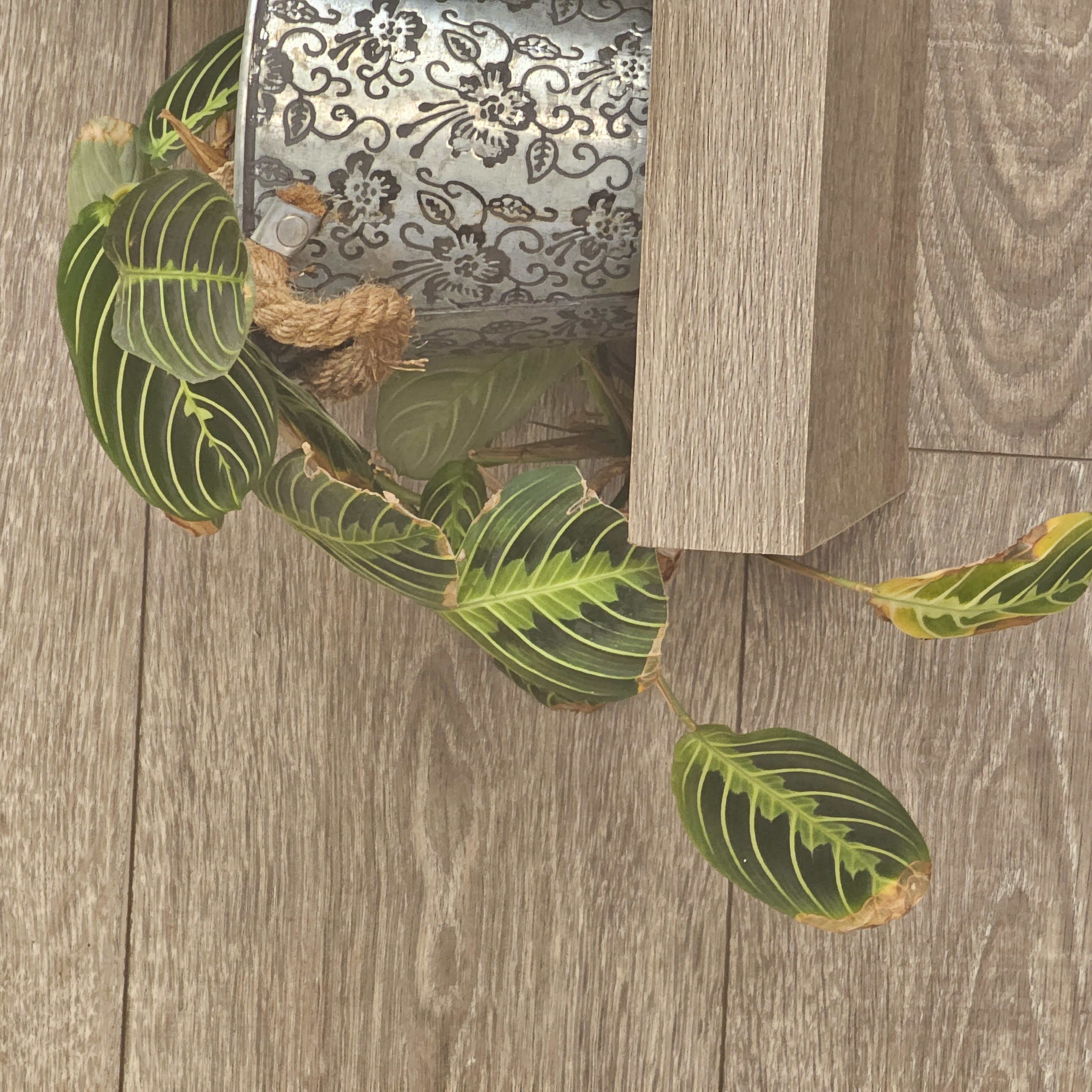
🌙 Nyctinasty (Leaf Movement)
Prayer Plants and other Marantaceae fold their leaves upward at night and open flat by morning. This is driven by pulvini — swollen hinge cells at the base of each leaf that expand and contract in response to light changes. The movement is completely normal and fascinating to watch.
🔬 What plants need
- Macronutrients: Nitrogen (N) for growth, Phosphorus (P) for roots & flowers, Potassium (K) for overall health
- Light: Drives photosynthesis. More light = more energy = faster growth
- Water: Carrier for nutrients; keeps cells turgid
- Humidity: Slows water loss through leaves; prevents crispy tips
- Temperature: Controls enzyme activity — most tropicals prefer 18–27°C